

Marinara Sauce vs Pasta Sauce vs Pizza Sauce vs Tomato Sauce: What’s the Real Difference?
You are standing in the sauce aisle.
Every jar looks red.
Every label sounds tasty.
Marinara. Pasta sauce. Pizza sauce. Tomato sauce.
So you ask yourself, “Can I just grab any one of these?”
The short answer is yes, sometimes.
But each sauce has its own job.
Think of them like shoes. Sneakers, boots, and sandals all go on your feet. But you would not wear flip-flops in the snow.
Sauce works the same way.
Some sauces are bright and fresh.
Some are thick and rich.
Some are made for pasta.
Some are made for a hot pizza oven.
Let’s make it simple.
Quick Answer: What’s the Difference?
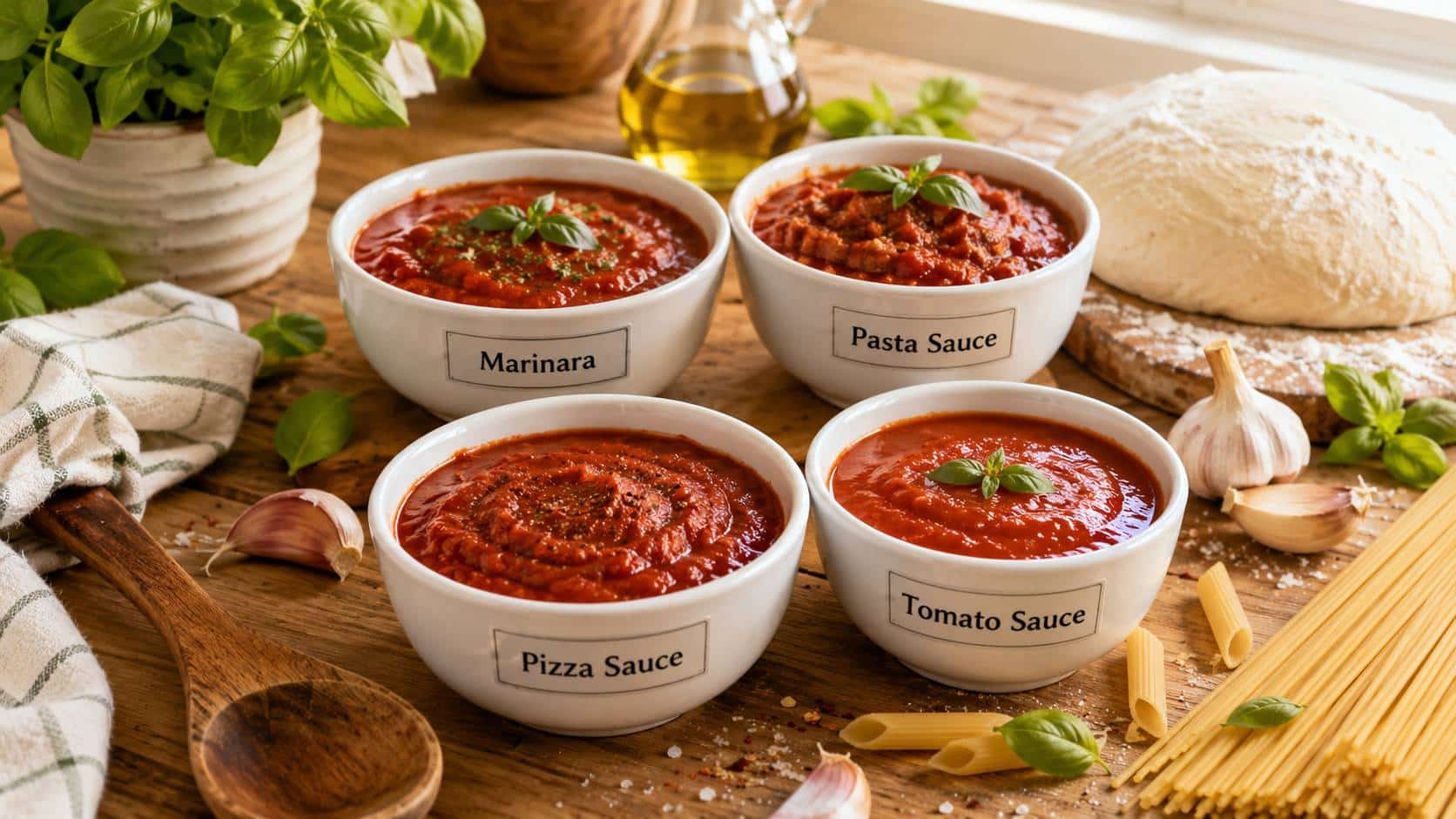
Marinara sauce is light, simple, and quick-cooked. It usually tastes bright, garlicky, and fresh.
Pasta sauce is a broad name. It means any sauce made for pasta. It can be tomato-based, creamy, meaty, chunky, or smooth.
Pizza sauce is usually thicker and less cooked. It keeps a fresh tomato taste after baking in the oven.
Tomato sauce is the basic red sauce. It can be smooth, cooked, and used as a base for many dishes.
Here is the easy way to remember it:
| Sauce | Taste | Texture | Best Use |
|---|---|---|---|
| Marinara sauce | Fresh, garlicky, herby | Light and smooth | Pasta, dipping, simple meals |
| Pasta sauce | Rich, cooked, flexible | Smooth or chunky | Spaghetti, lasagna, baked pasta |
| Pizza sauce | Bright, bold tomato flavor | Thick and spreadable | Pizza, flatbread, calzones |
| Tomato sauce | Mild, simple, tomato-forward | Smooth | Soups, stews, casseroles, sauce base |
What Is Marinara Sauce?
Marinara is the friendly sauce.
It does not try too hard.
It does not need a long cooking time.
It just tastes like tomatoes, garlic, herbs, and olive oil coming together in a warm pan.
Picture this.
It is a busy Tuesday night. You boil pasta. You warm marinara. The kitchen starts to smell like garlic and basil. In 15 minutes, dinner feels homemade.
That is marinara.
It is great with:
-
- Spaghetti
- Meatballs
- Mozzarella sticks
- Garlic bread
- Chicken parmesan
- Eggplant parmesan
- Simple baked pasta
Marinara is usually thinner than pizza sauce. It also tastes brighter than a slow-cooked tomato sauce.
It is a good choice when you want a clean, simple red sauce.
What Is Pasta Sauce?
Pasta sauce is not one single sauce.
It is a big family.
Marinara is a pasta sauce.
Meat sauce is a pasta sauce.
Tomato basil sauce is a pasta sauce.
Arrabbiata is a pasta sauce.
Alfredo is also a pasta sauce, even though it is not red.
When people say “pasta sauce,” they usually mean a cooked tomato sauce in a jar.
It may have onions.
It may have garlic.
It may have herbs.
It may have meat, mushrooms, peppers, or cheese.
Pasta sauce is made to go straight on cooked noodles. That means the flavor should already be ready.
No oven needed.
No extra cooking needed.
Just heat, pour, and eat.
A good pasta sauce should cling to noodles. It should not run to the bottom of the plate like soup.
For example, a chunky pasta sauce works well with penne. The sauce sits inside the little tubes. A smooth tomato basil sauce works well with spaghetti. It coats every strand.
That is why pasta sauce feels so comforting. It hugs the pasta.
What Is Pizza Sauce?
Pizza sauce has a different job.
It has to sit on raw dough.
It has to hold up under cheese.
It has to bake in a hot oven.
That means pizza sauce is usually thicker than pasta sauce. It is also often less cooked before it goes on the dough.
Why?
Because it will cook in the oven.
A pizza sauce should taste bold. It should have a fresh tomato kick. It should not be watery. If it is too thin, the pizza crust gets soggy.
Nobody wants sad, floppy pizza.
Think about Friday pizza night. You spread a spoonful of sauce on the dough. It smells like ripe tomatoes and oregano. You add cheese. The edges bubble. The sauce gets sweeter and deeper as it bakes.
That is pizza sauce doing its job.
Pizza sauce is best for:
-
- Homemade pizza
- Flatbread pizza
- Pizza rolls
- Calzones
- Stromboli
- Pizza toast
- Mini party pizzas
What Is Tomato Sauce?
Tomato sauce is the most general name.
It can mean many things, depending on the country, brand, or recipe.
In many kitchens, tomato sauce is a smooth cooked tomato base. It may be plain. It may be seasoned. It may be used as a starting point for other sauces.
Tomato sauce is useful because it is flexible.
You can turn it into marinara with garlic, basil, and olive oil.
You can turn it into pasta sauce with onions, herbs, and meat.
You can turn it into pizza sauce by making it thicker and adding oregano.
It is like a blank canvas.
Restaurants, food factories, and meal brands often use tomato sauce as a base. From there, they can build different flavors for different markets.
A sweeter sauce may work better for one region.
A spicier sauce may work better for another.
A clean-label sauce may be better for health-focused buyers.
The base matters.
Can You Use Marinara Sauce as Pasta Sauce?
Yes. Absolutely.
Marinara is one of the easiest pasta sauces to use.
Warm it in a pan. Add cooked pasta. Toss everything together. Add a little pasta water if needed. The sauce will become silky and smooth.
For a simple meal, add parmesan and fresh basil.
For a heartier meal, add sausage, mushrooms, or roasted vegetables.
Marinara is also great when you do not want a heavy dinner. It feels light, fresh, and homey.
Can You Use Pasta Sauce for Pizza?
Yes, but you may need to fix it a little.
Many pasta sauces are thinner than pizza sauce. Some are also chunky. That can make pizza wet.
Here is the easy trick.
Pour the pasta sauce into a pan. Let it simmer for a few minutes. Stir it often. Let some water cook away. If it has big tomato chunks, blend it a little.
Now it is thicker.
Now it spreads better.
Now your crust has a better chance.
This works well when you are making a quick pizza at home and do not want to open another jar.
A small example:
You have leftover tomato basil pasta sauce from last night. You also have flatbread, cheese, and pepperoni. Simmer the sauce for 5 minutes. Spread it thin. Bake until crisp.
Dinner is saved.
Can You Use Pizza Sauce for Pasta?
Yes, in a pinch.
But pizza sauce can taste sharp if you eat it straight from the jar. It was made to bake, not to coat hot pasta right away.
To make it better for pasta, warm it in a pan with a splash of water. Add olive oil, garlic, or a little butter. Let it simmer for a few minutes.
You can also add cooked chicken, mushrooms, peppers, or spinach.
The sauce will soften. The flavor will feel rounder.
This is a smart move when the pantry is almost empty.
A bowl of pasta with pizza sauce is not fancy. But with garlic, olive oil, and a little cheese, it can still feel warm and satisfying.
Can You Use Tomato Sauce Instead of Marinara?
Yes.
But plain tomato sauce may taste flat.
Marinara has more personality. It usually has garlic, herbs, and olive oil.
To turn tomato sauce into a quick marinara, add:
-
- Garlic
- Olive oil
- Basil
- Oregano
- A small pinch of sugar, if the tomatoes taste sharp
- Salt and black pepper
Let it simmer until the kitchen smells good.
That is the real test.
If the sauce smells like something you want to dip bread into, you are on the right track.
Which Sauce Is Best for Pasta?
For everyday pasta, choose marinara or pasta sauce.
Marinara is best when you want something light and fresh.
Pasta sauce is best when you want something richer. It is also better for baked dishes, like lasagna or baked ziti.
Here is a simple guide:
Use marinara for a quick spaghetti dinner.
Use chunky pasta sauce for penne or rigatoni.
Use meat sauce for a hearty family meal.
Use tomato sauce as a base when you want to build your own flavor.
Which Sauce Is Best for Pizza?
Pizza sauce is the best choice for pizza.
It is thick.
It spreads well.
It keeps the crust from getting too wet.
Marinara can also work on pizza. But use a thin layer. If the marinara is watery, simmer it first.
Pasta sauce can work too. Just thicken it before baking.
The best pizza sauce should taste bold before it goes into the oven. Once it bakes with cheese, the flavor becomes softer and sweeter.
That is what gives pizza its warm, rich, “just one more slice” feeling.
Which Sauce Is Best for Dipping?
Marinara wins here.
It is smooth, bright, and easy to love.
Use it for:
-
- Breadsticks
- Fried cheese
- Garlic knots
- Calzones
- Chicken tenders
- Toasted ravioli
Warm marinara in a small bowl. Add a little parmesan on top. Serve it with hot bread.
It feels simple. But people always come back for more.
What Should Food Brands and Restaurants Know?
For home cooks, sauce choice is about dinner.
For food brands, importers, restaurants, and private-label buyers, sauce choice is bigger.
It affects texture.
It affects shelf life.
It affects how the sauce looks in a jar.
It affects how customers use it.
A pizza sauce should be thick enough for dough.
A pasta sauce should be ready to heat and serve.
A marinara should taste clean and fresh.
A tomato sauce should work as a flexible base.
That is why sauce development matters.
At Desly Foods, sauces are not treated as “one red sauce fits all.” Different markets need different flavors, pack sizes, and uses.
A restaurant may need bulk sauce for daily service.
A retailer may need private-label jars for shelves.
A food factory may need a stable sauce base for ready meals.
A meal-kit brand may need small packs that taste fresh after heating.
The right sauce makes cooking easier. It also makes the final dish taste more reliable.
And that is what customers remember.
Simple Sauce Swap Guide
Here is the easiest way to swap sauces without ruining dinner.
Using marinara for pizza?
Simmer it until thicker. Use a light layer.
Using pasta sauce for pizza?
Blend it if chunky. Simmer it if thin.
Using pizza sauce for pasta?
Warm it with water, olive oil, and garlic.
Using tomato sauce for pasta?
Season it well. Add herbs, garlic, and a little fat.
Using tomato sauce for pizza?
Make it thick. Add oregano, garlic, salt, and pepper.
Sauce swaps are not about rules. They are about texture and taste.
If it is too thin, thicken it.
If it is too plain, season it.
If it is too sharp, simmer it.
If it is too heavy, add a splash of water.
That is the secret.
Final Takeaway
Marinara, pasta sauce, pizza sauce, and tomato sauce all start with tomatoes.
But they are not the same.
Marinara is light and fresh.
Pasta sauce is cooked and ready for noodles.
Pizza sauce is thick and made for baking.
Tomato sauce is a flexible base.
Once you know the difference, the sauce aisle feels less confusing.
You can cook with more confidence.
You can fix dinner faster.
You can make better pizza, pasta, and dips.
And if you are choosing sauces for a restaurant, retail brand, or food service project, the same idea still matters.
The right sauce should fit the dish.
It should fit the customer.
It should taste good every single time.
That is what turns a simple red sauce into something people remember.
K
L
Is marinara sauce the same as pasta sauce?
Marinara is a type of pasta sauce. But not every pasta sauce is marinara. Pasta sauce can be chunky, creamy, meaty, or rich. Marinara is usually simple, smooth, and tomato-based.
K
L
Is pizza sauce the same as pasta sauce?
No. Pizza sauce is usually thicker and often less cooked. Pasta sauce is usually cooked and ready to pour over noodles.
K
L
Can I use pasta sauce for pizza?
Yes. But it works better if you simmer it first. This makes it thicker and helps stop the pizza crust from getting soggy.
K
L
Can I use pizza sauce for pasta?
Yes. Warm it in a pan with a splash of water, olive oil, and garlic. Let it simmer for a few minutes before adding pasta.
K
L
Is tomato sauce the same as marinara?
Not exactly. Tomato sauce is more basic. Marinara usually has garlic, herbs, and olive oil. You can turn tomato sauce into marinara by adding more flavor.
K
L
Which sauce is the thickest?
Pizza sauce is usually the thickest. It needs to stay on the dough and hold up in the oven.
K
L
Which sauce is best for dipping?
Marinara is usually best for dipping. It tastes fresh, smooth, and bright. It works well with breadsticks, cheese sticks, and garlic knots.
Desly Foods Taste of the world
Welcome to Desly Foods website where you can find our delicious sauce. Our product is made with high-quality ingredients and traditional recipes to ensure the best flavor for your dishes. Whether you are a professional chef or a home cook, our sauce is perfect for adding a touch of sweetness and umami to your favorite recipes.
We take pride in offering a product that not only tastes great but is also made with care and attention to detail. Desly Foods sauce is a staple in many Asian households and we are excited to share it with you.
So why wait? Explore our website and discover the delicious world of our sauce today.
3 Comments
Ready for your next post?
My brother suggested I might like this website.
He was entirely right. This post truly made my day.
You can not imagine just how much time I had spent for this info!
Thanks!
I like the helpful info you provide in your articles. I’ll bookmark your weblog and check again here regularly.
I’m quite certain I will learn plenty of new stuff right here!
Good luck for the next!
Tһіs is a really intereѕting post. Appreciate the effort.
Looking forward tߋ more contеnt lіke this.