
Is Soy Sauce Gluten-Free? A Simple Guide for Asian Food Lovers
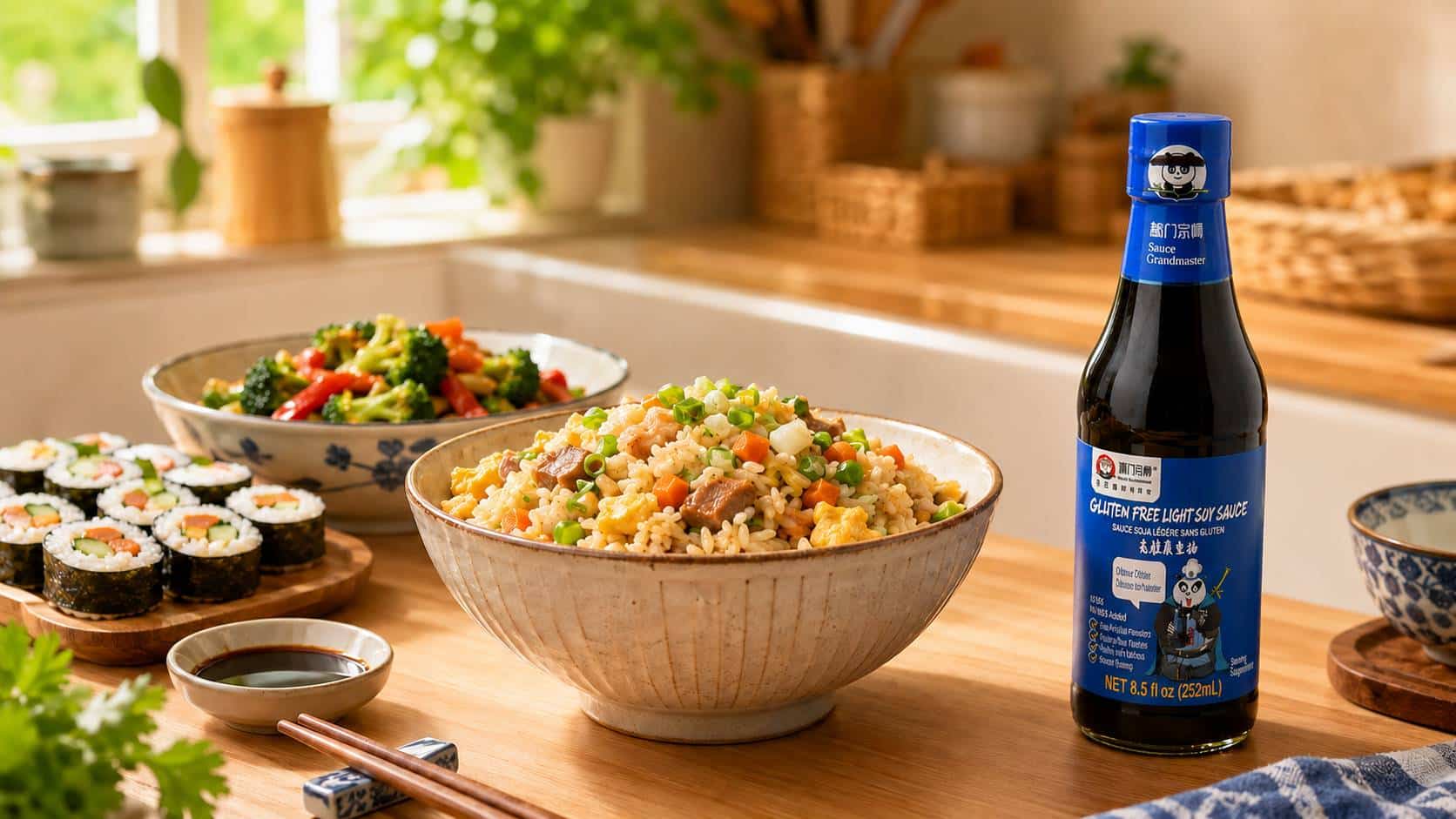
Soy sauce feels so simple.
You splash it into fried rice.
You dip sushi in it.
You add it to noodles, dumplings, soups, and marinades.
It gives food that deep, salty, savory taste we all love.
But here is the catch.
Many regular soy sauces are not gluten-free.
That can be a surprise. The name says “soy sauce,” so many people think it only comes from soybeans. But traditional soy sauce often contains wheat too.
For people who avoid gluten, that small detail matters a lot.
The good news? You can still enjoy Asian cooking. You just need the right gluten-free soy sauce.
Let’s make it easy.
Is soy sauce gluten-free?
Most traditional soy sauce is not gluten-free.
Why?
Because it is often made with:
-
- Soybeans
- Wheat
- Salt
- Water
The wheat helps create the classic flavor. But wheat also contains gluten.
So if you have celiac disease, gluten sensitivity, or you cook for someone who avoids gluten, regular soy sauce is not the safest choice unless the label clearly says gluten-free.
A tiny splash can still matter.
Think about a bowl of fried rice. You may only add one spoon of soy sauce. But that spoon goes through the whole dish. If the sauce contains wheat, the whole dish is no longer gluten-free.
That is why label reading is so important.
Why is wheat in soy sauce a problem?
Soy sauce hides in many places.
It is in stir-fry sauce.
It is in marinades.
It is in dipping sauce.
It can be in soups, salad dressings, snacks, and frozen meals.
You may not see it. But your body may still feel it.
For someone with celiac disease, gluten is not just a small stomach issue. It can cause real harm. For someone with gluten sensitivity, it may lead to bloating, tiredness, headaches, or that heavy “something feels off” feeling.
That is why a gluten-free kitchen needs more than gluten-free bread or pasta.
It also needs gluten-free sauces.
Especially soy sauce.
What should you look for on the label?
Keep it simple.
Look for clear words like:
-
- Gluten-free
- Wheat-free
- No wheat
- Tamari-style
- Made without wheat
Then check the ingredient list.
Avoid soy sauce if you see:
-
- Wheat
- Wheat flour
- Barley
- Rye
- Malt
- Regular soy sauce with no gluten-free claim
Also look at the allergen line. If it says “contains wheat,” put it back.
A pretty bottle does not mean it is safe.
A premium bottle does not mean it is gluten-free.
A low-sodium bottle does not mean it is gluten-free.
The label has to say it clearly.
Can gluten-free soy sauce still taste good?
Yes. Absolutely.
Gluten-free soy sauce does not have to taste flat or strange.
A good one should still give you that rich, savory, mouthwatering flavor.
You want the taste that makes fried rice smell amazing.
You want that glossy color on noodles.
You want dumplings to taste warm, salty, and full.
You want tofu to soak up flavor like a little sponge.
That is what a good gluten-free soy sauce can do.
It lets you cook the food you love, without giving up comfort.
Light soy sauce vs. dark soy sauce: what is the difference?
This is where Asian cooking gets fun.
Light soy sauce and dark soy sauce are not the same.
Light soy sauce is usually used for taste.
It is salty, savory, and bright.
It wakes up the dish.
Use it for:
-
- Fried rice
- Stir-fried vegetables
- Noodles
- Dumpling dipping sauce
- Sushi dipping
- Marinades
- Soups
Dark soy sauce is usually used for color and deeper flavor.
It makes food look rich, glossy, and beautiful.
Use it for:
-
- Braised pork
- Soy sauce chicken
- Dark fried rice
- Red-cooked dishes
- Stews
- Noodle sauces
- Mushroom dishes
Here is a simple kitchen story.
You are making beef chow fun at home. The noodles hit the hot pan. Garlic starts to smell sweet. The beef browns at the edges. You add gluten-free light soy sauce for that salty kick. Then you add a small spoon of mushroom dark soy sauce. Suddenly, the noodles turn shiny and deep brown. The dish looks like it came from a restaurant.
That is the magic of using both.
A better choice for gluten-free Asian cooking
If you love Asian food but need to avoid gluten, DESLY FOODS recommends keeping two bottles in your kitchen.
One for daily seasoning.
One for color, depth, and slow-cooked dishes.
1. Sauce Grandmaster Gluten-Free Light Soy Sauce
This is the bottle you will reach for again and again.
It is great for everyday cooking. It works well when you want clean, savory flavor without wheat.
Use it in:
-
- Sushi dipping sauce
- Egg fried rice
- Chicken stir-fry
- Cucumber salad
- Dumpling sauce
- Garlic noodles
- Tofu marinades
Try this easy dipping sauce:
Mix gluten-free light soy sauce with a little rice vinegar, sesame oil, fresh garlic, and chili flakes.
Dip dumplings into it.
The taste is salty, bright, warm, and a little spicy. It feels like comfort food in one small bowl.
Recommended product:
Sauce Grandmaster Gluten-Free Light Soy Sauce
2. Sauce Grandmaster Gluten-Free Mushroom Dark Soy Sauce
This one is for deeper flavor.
It brings a rich color and a gentle mushroom aroma. It is perfect when you want food to look glossy and taste full.
Use it in:
-
- Braised chicken
- Red-cooked pork
- Mushroom noodles
- Dark fried rice
- Slow-cooked tofu
- Beef stir-fry
- Soy-braised vegetables
Picture this.
A pot is gently bubbling on the stove. Chicken, ginger, garlic, and mushrooms are soaking in sauce. A spoon of mushroom dark soy sauce gives the dish a deep brown shine. The smell is earthy, warm, and cozy.
That is the kind of flavor people remember.
Recommended product:
Sauce Grandmaster Gluten-Free Mushroom Dark Soy Sauce
Can you use gluten-free soy sauce in regular recipes?
Yes.
In most recipes, you can swap regular soy sauce for gluten-free soy sauce.
Use the same amount.
If the recipe calls for light soy sauce, use gluten-free light soy sauce.
If the recipe calls for dark soy sauce, use gluten-free dark soy sauce.
If the recipe only says “soy sauce,” use gluten-free light soy sauce for a clean and easy swap.
For deeper color, add a small amount of gluten-free mushroom dark soy sauce.
A little goes a long way.
Where does soy sauce hide in food?
This is the part many people miss.
Soy sauce can hide in foods that do not look “Asian” at all.
Check labels on:
-
- Jerky
- Salad dressing
- Barbecue sauce
- Marinades
- Frozen meals
- Seasoned rice
- Soup mixes
- Snack foods
- Stir-fry kits
- Restaurant sauces
At restaurants, ask simple questions.
“Do you use regular soy sauce?”
“Do you have gluten-free soy sauce?”
“Is the marinade made with wheat?”
“Can you cook it without regular soy sauce?”
You do not need to feel awkward.
You are just taking care of yourself.
Food should feel safe and joyful.
Easy gluten-free Asian meal ideas
Here are a few simple ideas for busy nights.
Gluten-Free Garlic Fried Rice
Use cold rice, eggs, green onions, garlic, and gluten-free light soy sauce.
Add a few drops of mushroom dark soy sauce if you want a deeper color.
It smells warm and toasty. The rice gets golden at the edges. Every bite feels simple and satisfying.
Gluten-Free Chicken Stir-Fry
Cook chicken with broccoli, carrots, bell peppers, and garlic.
Add gluten-free light soy sauce near the end.
The vegetables stay crisp. The chicken gets savory. Dinner is ready fast.
Gluten-Free Soy-Braised Mushrooms
Cook mushrooms with ginger, garlic, a little sugar, gluten-free light soy sauce, and mushroom dark soy sauce.
The mushrooms turn glossy. The sauce gets rich. It is amazing over hot rice.
Gluten-Free Dumpling Dip
Mix gluten-free light soy sauce, rice vinegar, sesame oil, chili oil, and chopped scallions.
It is sharp, salty, nutty, and bright.
It makes even simple dumplings taste special.
Final answer: should you avoid soy sauce?
You do not need to avoid all soy sauce.
You need to avoid soy sauce that contains wheat or does not clearly say gluten-free.
That is the real difference.
Traditional soy sauce often contains wheat. But gluten-free soy sauce gives you a safe and easy way to keep cooking the dishes you love.
You can still enjoy sushi night.
You can still make fried rice.
You can still cook noodles, dumplings, tofu, chicken, and braised dishes.
Just choose the right bottle.
With Sauce Grandmaster Gluten-Free Light Soy Sauce and Sauce Grandmaster Gluten-Free Mushroom Dark Soy Sauce, gluten-free Asian cooking can still taste rich, warm, and full of joy.
No wheat.
No boring food.
Just real flavor.
K
L
Is soy sauce gluten-free?
Most regular soy sauce is not gluten-free because it often contains wheat. Always check the label and choose soy sauce that clearly says gluten-free.
K
L
Why does soy sauce contain wheat?
Wheat is often used in traditional soy sauce brewing. It helps build flavor, color, and aroma. But it also brings gluten.
K
L
Is tamari gluten-free?
Some tamari is gluten-free, but not all. Always read the label. Choose tamari or soy sauce that clearly says gluten-free.
K
L
Can I use gluten-free soy sauce for fried rice?
Yes. Gluten-free light soy sauce works very well in fried rice. It gives the rice a salty, savory flavor without wheat.
K
L
What is gluten-free dark soy sauce used for?
Gluten-free dark soy sauce is great for color and deeper flavor. Use it in braised dishes, dark fried rice, noodles, stews, and marinades.
K
L
Is low-sodium soy sauce gluten-free?
Not always. Low-sodium only means less salt. It does not mean gluten-free. Check the ingredient list and gluten-free label.
K
L
What soy sauce should I use for gluten-free Asian cooking?
Use gluten-free light soy sauce for daily seasoning. Use gluten-free mushroom dark soy sauce for rich color, braising, and deeper flavor.
Desly Foods Taste of the world
Welcome to Desly Foods website where you can find our delicious sauce. Our product is made with high-quality ingredients and traditional recipes to ensure the best flavor for your dishes. Whether you are a professional chef or a home cook, our sauce is perfect for adding a touch of sweetness and umami to your favorite recipes.
We take pride in offering a product that not only tastes great but is also made with care and attention to detail. Desly Foods sauce is a staple in many Asian households and we are excited to share it with you.
So why wait? Explore our website and discover the delicious world of our sauce today.
0 Comments